
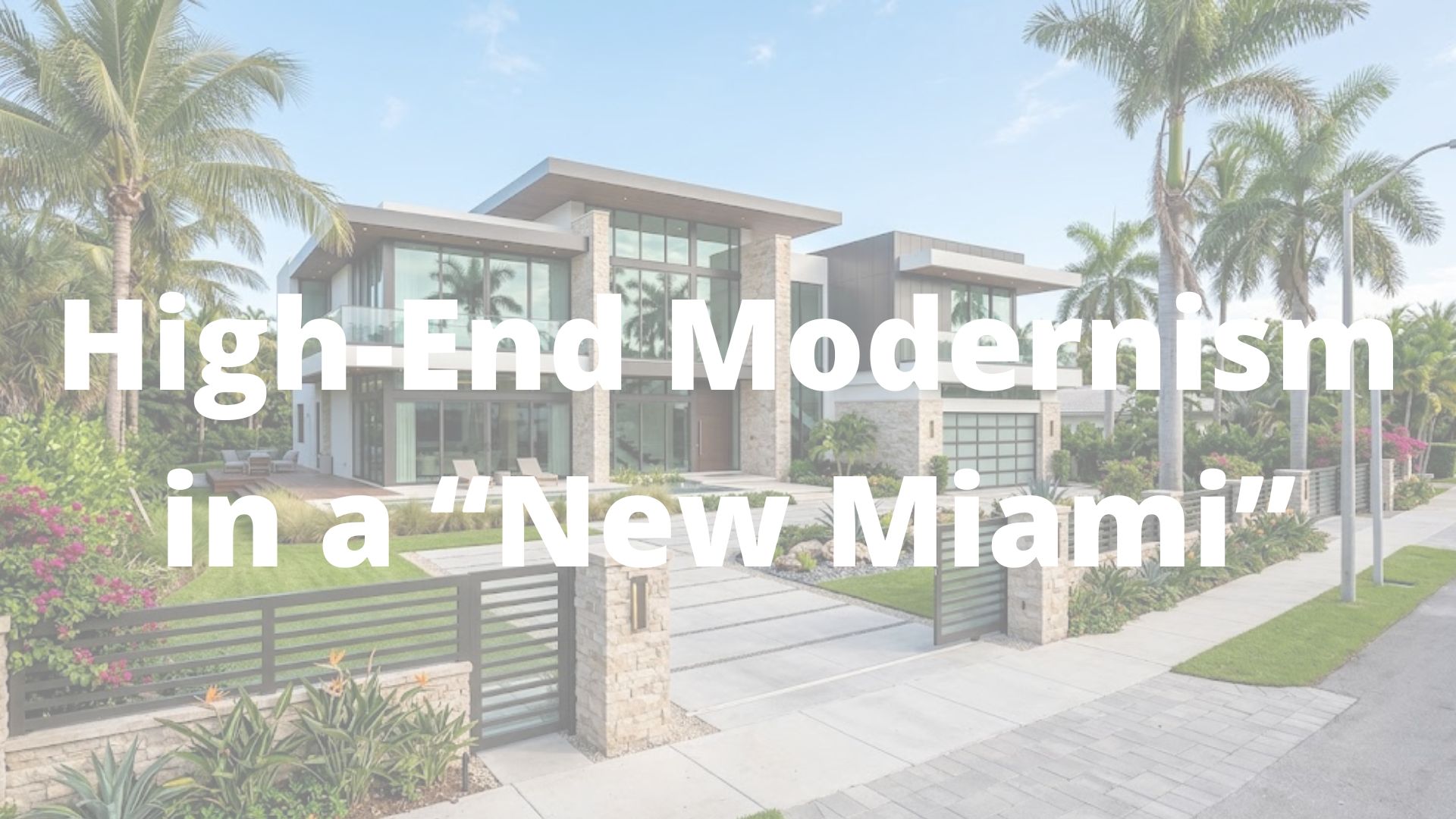
While “Old Miami Money” cemented its legacy in Mediterranean Revival and Neoclassical estates today’s “New Miami Money” embraces hyper-modern, tech-infused architecture defined by minimalist cantilevered concrete and floor-to-ceiling glass walls. Behind the minimalist aesthetic lies an intensely complex engineering and legal process. Building a custom modern home in South Florida requires navigating rigorous coastal codes, volatile material costs, climate resilience requirements, and dense legal contracts.
The Complexities of Modern Custom Architecture in Miami
- Modern architectural builds present unique construction demands compared to traditional wood-frame or concrete-block structures:
- Large-Span Structural Steel & Post-Tensioned Concrete: Open-concept floor plans with massive glass spans require non-standard structural engineering.
- Curtain Walls & Impact Fenestration: Floor-to-ceiling glazing must comply with High-Velocity Hurricane Zone (HVHZ) standards while maintaining energy efficiency under harsh tropical exposure.
- Complex Below-Grade Waterproofing: With Miami’s shallow water table, underground garages or basement-level living areas require specialized foundation seals, pilings, and continuous dewatering systems.
Critical Building Risks in New Miami Construction
- High-Velocity Hurricane Zone (HVHV) & Climate Compliance: Miami-Dade County operates under strict building code requirements for wind load resistance and impact rating. Integrating modern design elements—such as flush interior-exterior track doors or cantilevered overhangs—requires strict engineering sign-offs.
- Supply Chain Volatility & Material Delays: Custom modern homes frequently rely on specialized imported materials: German-engineered fenestration systems, Italian custom cabinetry, or European natural stone. Global trade delays or customs holds can derail construction timelines and trigger severe carrying-cost increases.
- Subsurface & Water Table Challenges: Excavation and foundation work along Miami’s coastal and canal-front properties present significant geotechnical risks. Inadequate soil testing or faulty dewatering plans can lead to structural settling, seawater intrusion, or neighbor disputes during piling installation.
- Permitting Delays & Zoning Restrictions: Navigating municipal zoning boards, setback restrictions, overlay districts, and environmental permissions (such as DERM or Florida DEP permits for coastal construction) often adds substantial time before vertical construction even begins.
Key Terms in Modern Construction Contracts
To protect capital and manage risk, luxury builds require carefully drafted contracts beyond standard off-the-shelf forms:
- Contract Structure: Cost-Plus vs. Guaranteed Maximum Price (GMP) Cost-Plus Fee: Common for highly custom architectural homes where scope evolves during construction. Owners pay actual costs plus an agreed contractor markup. It offers flexibility but carries financial risk if costs escalate.
- Escalation & Allowances Clauses: With fluctuating prices on raw materials (steel, concrete, specialized glass), clear price escalation clauses determine how material cost increases are shared between the owner and builder.
- Dispute Resolution & Mechanic’s Liens (Florida Chapter 713): Under Florida law, subcontractors and material suppliers can file mechanic’s liens against property if unpaid by the general contractor. Contracts must clearly outline Notice of Commencement procedures, partial lien waivers, and final releases of lien prior to progress payments.
- Liquidated Damages & Delay Provisions: Delays from weather or supply chains are common, but contractually defining excusable vs. non-excusable delays, paired with clear liquidated damages clauses—ensures accountability for project completion dates.
Resources:
- Florida Department of Business and Professional Regulation (DBPR) – Construction Industry Licensing Board: Verify general contractor licenses, check registered vs. certified contractor statuses, and review regulatory enforcement.
- Florida Housing Data Clearinghouse (Shimberg Center for Housing Studies): State-level data and research on housing supply, construction trends, and regional building statistics in Florida.
- Miami-Dade County Regulatory and Economic Resources (RER): Access local building codes, High-Velocity Hurricane Zone (HVHZ) product approvals, permitting status portals, and zoning regulations.
- Florida Building Commission: Official source for the Florida Building Code, code updates, and state technical advisory committee decisions.

John Caravella, Esq
John Caravella Esq., is a construction attorney and formerly practicing project architect at The Law Office of John Caravella, P.C., representing architects, engineers, contractors, subcontractors, and owners in all phases of contract preparation, litigation, and arbitration across New York and Florida. He also serves as an arbitrator to the American Arbitration Association Construction Industry Panel.
The information provided on this website does not, and is not intended to, constitute legal advice; instead, all information, content, and materials available on this site are for general informational purposes only. Readers of this website should contact their attorney to obtain advice with respect to any particular legal matter. No reader, user, or browser of this site should act or refrain from acting on the basis of information on this site without first seeking legal advice from counsel in the relevant jurisdiction. Only your individual attorney can provide assurances that the information contained herein – and your interpretation of it – is applicable or appropriate to your particular situation. Use of, and access to, this website or any of the links or resources contained within the site do not create an attorney-client relationship between the reader, user, or browser and website authors, contributors, contributing law firms, or committee members and their respective employers.